
Wheaton Directory Runs by Year
The local shelf is not one continuous publication. It mixes city and county directories, phone books, suburban microfilm, and later address-order volumes. Record the title, publisher, year, and geographic scope before using an entry.
| Collection | Years | Where Held | Access |
|---|---|---|---|
| Bumstead's Wheaton and DuPage directory | 1915-16 | Internet Archive and WPL | Free scan; verify OCR |
| DuPage and Wheaton directories | 1924-25; 1940; 1950; 1999 | WPL Local History | Library collection |
| Wheaton telephone books | 1951-2016 | WPL Local History | In person |
| Haines criss-cross | 1988-2021; 2004-2021 | WPL Genealogy Center | Locked, non-circulating |
| Suburban telephone microfilm | 1920-1971 | WPL | Microfilm and staff help |
The 1999 Polk volume covers Wheaton and Warrenville. The Haines West Suburban run spans 1988 to 2021, while Near West Suburban spans 2004 to 2021. Coverage can shift between editions. Absence from one year never proves absence from Wheaton.
Telephone books offer the longest year-by-year bridge in the captured WPL holdings, but many editions include Glen Ellyn, Warrenville, West Chicago, or Winfield. A city directory citation should carry its full edition title, not just “Wheaton.” The suburban telephone microfilm reaches earlier years and can fill a gap between a printed directory and a census. Staff can also help determine whether a missing year reflects the collection, the publisher, or the area covered.
The census holdings create useful fixed points around those runs. WPL lists print census material for 1840 through 1870, microfilm for 1860 through 1880, 1910, and 1930, plus agricultural schedules from 1850 through 1880 and industry schedules for 1860 and 1870. A census household may add ages, relationships, and occupations that a city directory compresses or omits. Match the year, place, street, and household members before treating two similar names as the same person.
Access Wheaton Directory Shelves
Wheaton Public Library Local History is the main route for printed and filmed city directory sources. The library is at 225 N Cross Street, with help at 630-668-1374 and genealogy@wheatonlibrary.org. Its Genealogy Center is locked and non-circulating. Make an appointment or ask a specialist before assuming a volume can be downloaded.
The collection overview shows the range beyond city directories.
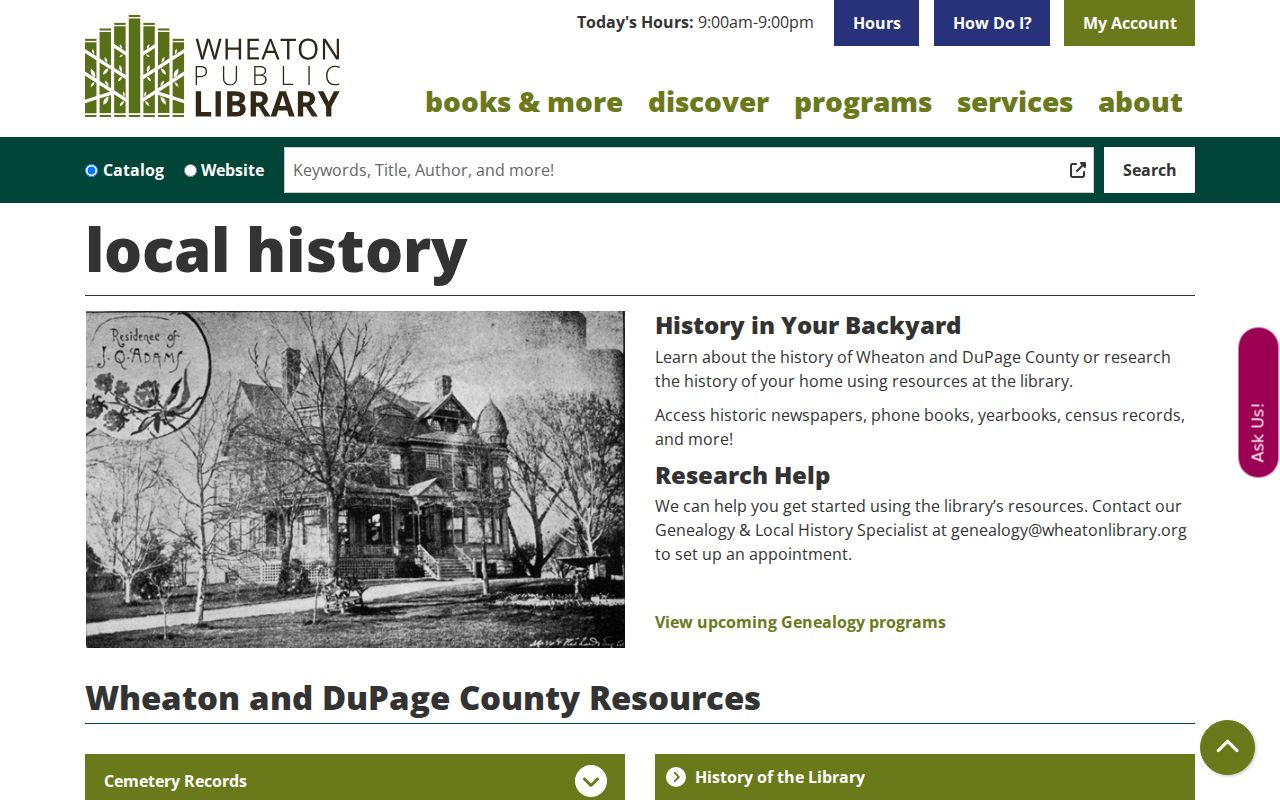
Telephone books, census, newspapers, maps, and vertical files help test names and addresses that appear in a directory entry.
Open Wheaton Directories Online
WPL lists digitized books including the 1915-16 Bumstead directory, the 1925-26 DuPage County directory, an 1855-56 gazetteer, an 1882 history, a 1918 Prairie Farmer directory, and an 1894 biographical volume. These sources differ in purpose and geographic reach. Preserve the original title and page when saving a name.
The Internet Archive scan of the 1915 volume has 1,022 pages and an OCR text layer.
OCR is a search aid, not the last word. Check the page image when a letter, initial, address, or occupation matters.
Other digitized works answer different questions. The 1892 book Wheaton and its homes supplies period city and building context, while the 1882 history and 1894 biographical volume may explain a person or institution named in a later directory. The Prairie Farmer directory and northern-counties gazetteer cover wider areas than the city. Cite each by its own title and date. Promotional claims in a period book should remain historical context until a map, deed, newspaper, or municipal record confirms the detail.
Read a Wheaton Directory Entry
The 1915 city directory lines combine names, titles, household notations, work, address, and telephone. Charles A. Blanchard's line names a Wheaton College role, a residence marker, Howard address, and home and office phones. Bollweg entries repeat a surname and address. That suggests a household lead, but not ownership.
| Name | Surname, given name or initials, title, and sometimes spouse in parentheses |
|---|---|
| Work | Occupation, role, employer, or a Chicago business connection |
| Address | Number, street, intersection, or business location |
| Marker | The letter “r” appears before residence lines; check the volume key |
| Telephone | Residence and sometimes office number |
- Criss-cross directory
- A later address-order source used to move from street to a listed name.
- Householder index
- An index organized around the person listed for a household, not a full occupancy roll.
- Abbreviation key
- The publisher's guide to shortened titles, work terms, streets, and relationship marks.
The residence marker is not an owner mark. Verify title in deeds and treat each printed line as a dated listing.
Entry order can reveal a lead without proving a relationship. The 1915 Bollweg lines repeat a surname and the 426 S West address, while another Bollweg line uses 222 S West. Several people printed at one address may form a household, but the directory does not settle kinship or title. Frances, Charles, and Julia Blanchard share 623 Howard and a telephone in their lines, yet each entry also records a distinct role. Save the nearby lines and page context, then test the group in census, newspaper, and deed sources.
Pair Wheaton Directories With Maps
A printed address may not match the current map. The WPL Sanborn Maps database covers Illinois fire-insurance maps from 1867 to 1970 and can show street blocks, buildings, and previous numbers.
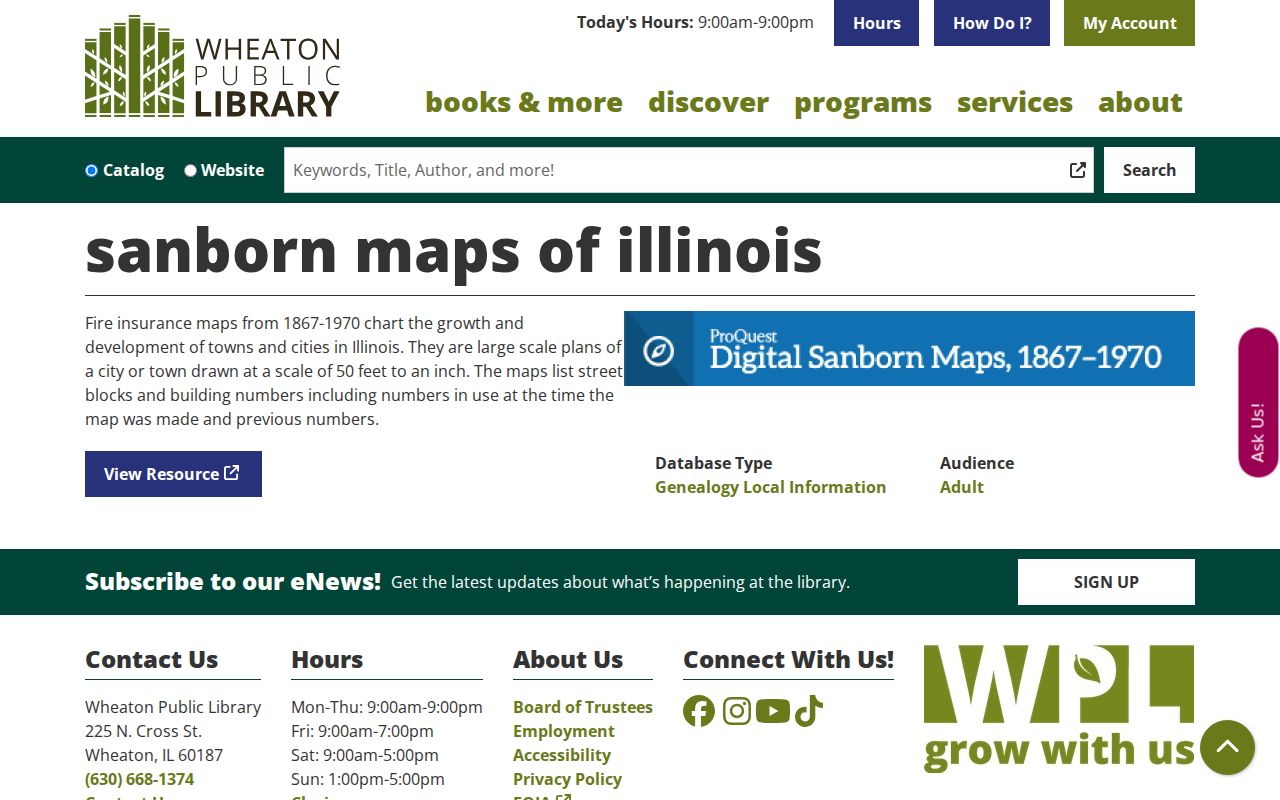
Maps locate the built setting. They do not prove who owned or occupied it, so join them to the same-year city directory and then to title records if ownership matters.
Extend Wheaton Directory Research
The DuPage Historical Museum research library adds photos, papers, organization records, oral histories, maps, platbooks, directories, newspapers, rare books, and 1950s through 1970s real-estate material. Help is available online, by mail, or at the front desk and may take up to two weeks. DuPage residents receive the first 30 minutes free, then research is $25 per hour; noncounty research begins at $25 per hour, plus reproduction charges.
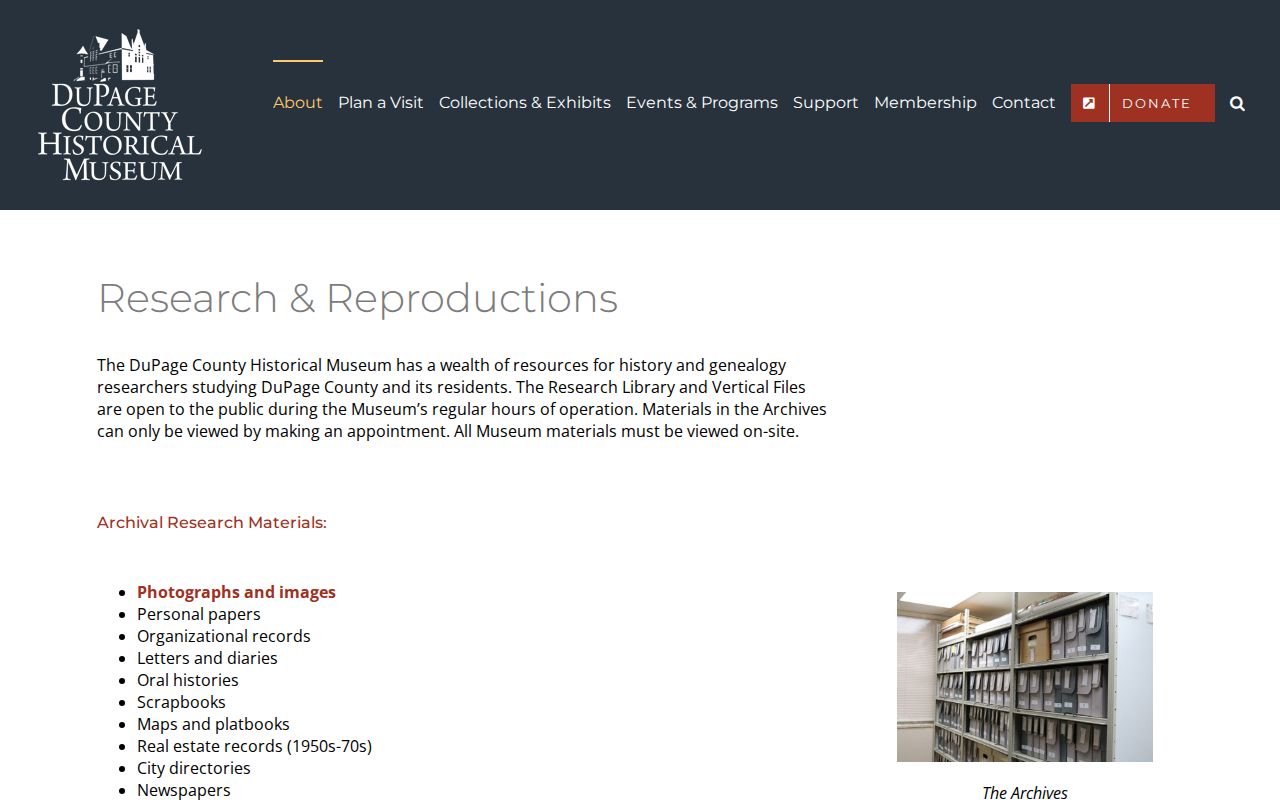
This handoff is useful when a WPL listing gives a name and date but no image or family context.
Check Wheaton Names in Newspapers
The library's Wheaton Illinoian vital-record index covers birth, marriage, and death notices from 1889 through 1893. Quick and advanced search fields provide a bridge when a directory name needs a dated event, but the index may preserve newspaper spelling and duplicate notices.
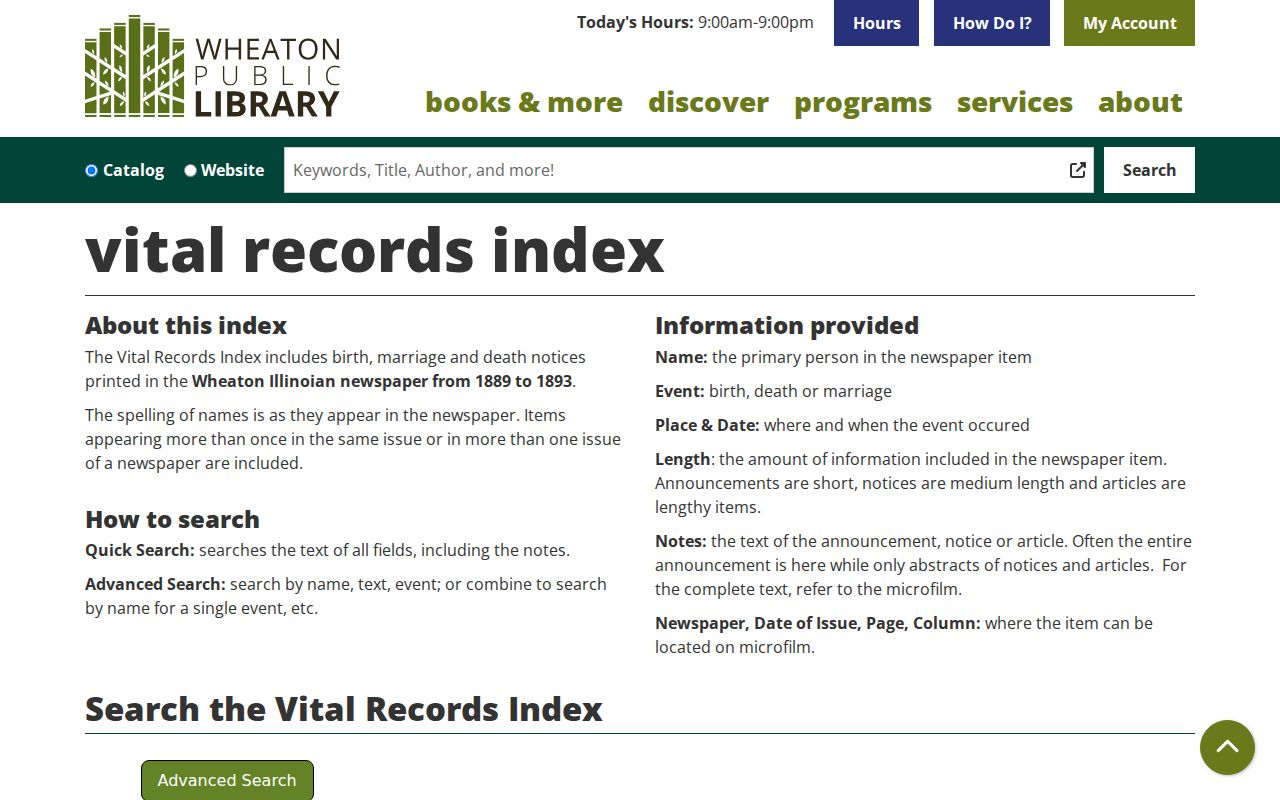
Open the source newspaper image when possible. An index hit identifies a notice lead, not a certified vital record or current identity.
Ask Wheaton Genealogy Specialists
The WPL Genealogy Center offers appointments, walk-in guidance, local groups, and access to sources that cannot be checked out. Its database mix includes in-library Ancestry Library access, FamilySearch affiliate access, HeritageQuest, HeritageHub, Newspaper Archive, and Fold3. Access terms differ, so ask staff which route fits the city directory clue.
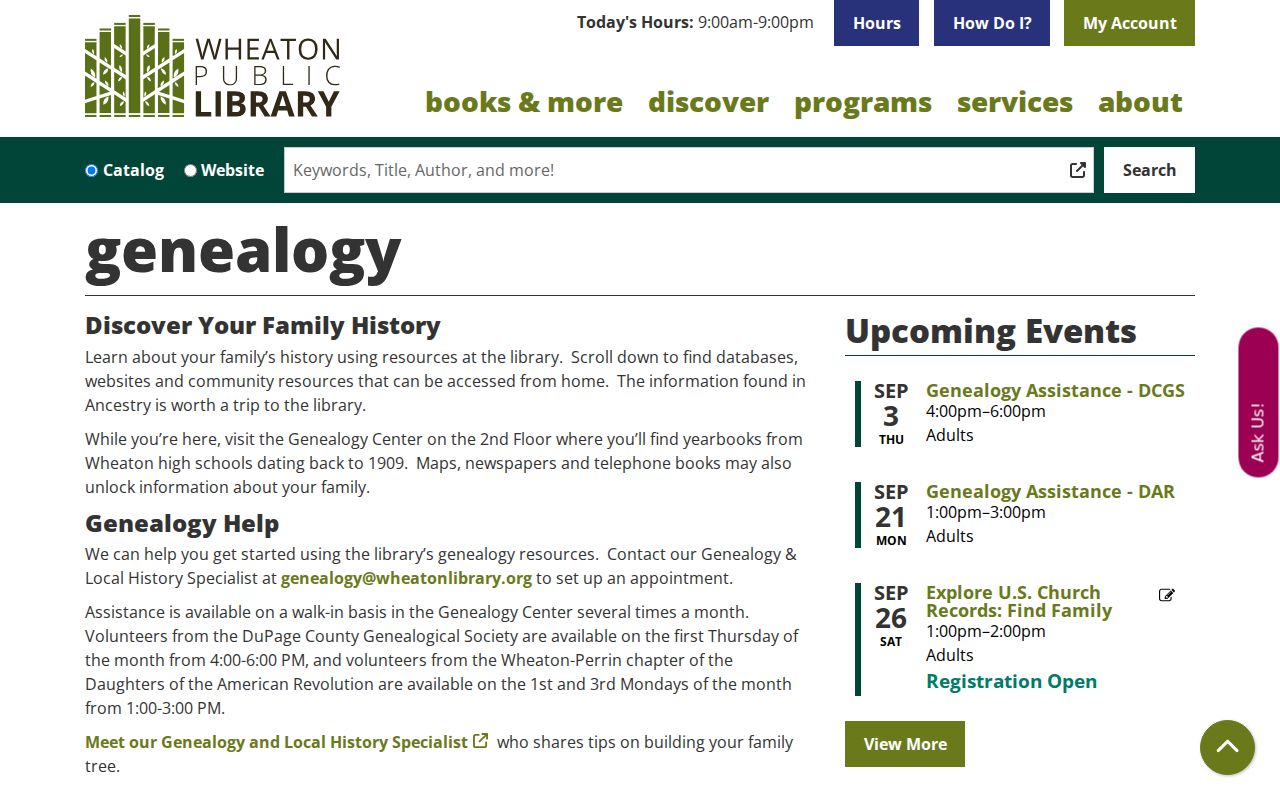
Specialist help matters most for missing years, weak OCR, boundary changes, and names that vary across print and microfilm.
Yearbooks can supply a second dated context. WPL lists Wheaton Community High School runs beginning in 1909, Wheaton Central years from 1965, and Wheaton North years from 1965, with gaps in each set. A school listing establishes an affiliation for that edition. It should not be treated as proof that a student lived within city limits. Newspapers add notices, work, civic activity, property leads, and obituaries, but OCR can miss names. Search initials and known variants, then verify the page image.
Trace Family Through Wheaton Directories
A city directory is strongest as one frame in a timeline. Move from a known entry into nearby years, but keep each absence unresolved until another source explains it. The 1915 examples show why. Blanchard lines connect a household address with Wheaton College roles, while Blunt and Bond lines pair Wheaton residence with Chicago work. Work location and residence must stay separate.
- Find the first city directory entry and save the full title, year, page, spelling, and printed address.
- Search the prior and next available edition. Note initials, spouse notation, work, phone, and any street change.
- Use a criss-cross directory for the address-order view, but do not turn nearby listings into a current neighbor claim.
- Pair the line with Wheaton census holdings for 1860 through 1880, 1910, or 1930 when the year fits.
- Test the conclusion with newspaper notices, deeds, Sanborn maps, yearbooks, or a Museum file.
A disappearance may reflect a move, death, changed surname, omitted listing, new boundary, publication gap, or OCR failure. Write “not found in this edition” until another source settles the reason. WPL itself warns that historical names, places, and dates can contain errors. That caution improves family research because it keeps a plausible match from becoming an unsupported identity claim.
Build the timeline with the lightest valid label. Use “listed at” for a city directory or phone-book line, “enumerated with” for a census household, and “named as grantor” or “named as grantee” for a deed index. If the trail reaches a modern address question, switch to the Wheaton street directory method and its official parcel and address-change records instead of carrying an old listing forward.
Note: The 1915 volume gave Wheaton a period population of 5,625; it is historical context, not a present count.